Contact Info
-
Branch 1: Pallav Towers, Pallavpuram Phase 2, Modipuram.
-
Branch 2: 11, Tyagi Hostel Market, W. K. Road, Meerut
- homeothics@gmail.com
- 7500738000
Branch 1: Pallav Towers, Pallavpuram Phase 2, Modipuram.
Branch 2: 11, Tyagi Hostel Market, W. K. Road, Meerut
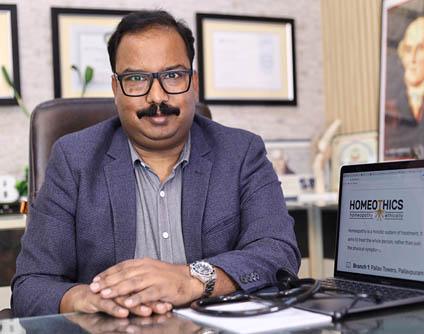
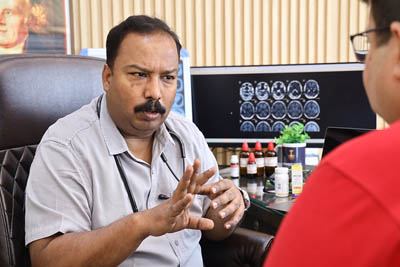
Parkinson's disease (PD) is a chronic neurodegenerative disorder that affects the central nervous system. It primarily disrupts the production of dopamine, a chemical messenger essential for smooth movement coordination. This disruption leads to the hallmark symptoms of PD, including tremors, stiffness, slowness of movement, and balance problems. While PD cannot be cured, effective treatment options can help manage symptoms and improve quality of life. At Homeothics in Meerut, Dr. Vivek Kumar (Sr. Homeopath) understands the challenges of living with PD.

Parkinson's disease is a neurodegenerative disorder that primarily affects movement. While the exact cause of Parkinson's disease is not fully understood, several factors are believed to contribute to its development:

While these factors may contribute to the development of Parkinson's disease, the condition is likely multifactorial, involving a complex interplay of genetic, environmental, and biological factors. Further research is needed to fully understand the underlying mechanisms of Parkinson's disease and develop effective treatments.
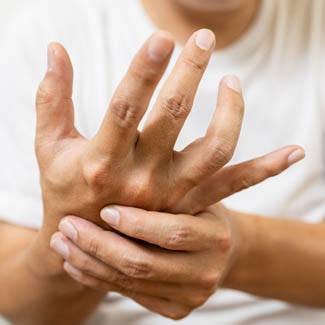
The signs and severity of PD can vary from person to person. Some common symptoms include:
At Homeothics, we believe in a holistic approach to support individuals with PD. Dr. Vivek Kumar will develop a personalized plan considering your specific symptoms and disease progression. Homeopathic remedies may help by:
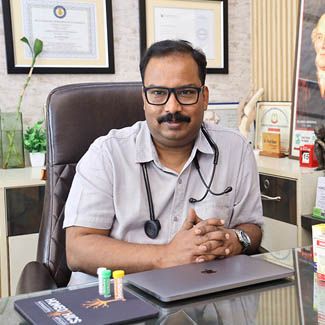
Homeothics is committed to providing personalized homeopathic care with a patient-first approach. Every treatment plan is carefully designed after understanding the patient's symptoms, medical history, lifestyle, and overall health instead of following a one-size-fits-all approach. Dr. Vivek Kumar has over 19 years of clinical experience in managing a wide range of acute and chronic health conditions through individualized homeopathic treatment. Patients from across Meerut and nearby cities trust Homeothics for professional consultation, compassionate care, and continuous treatment support. The focus is always on providing safe, personalized, and holistic homeopathic care to help improve overall health and well-being.
Dr. Vivek Kumar is an experienced homeopathic doctor in Meerut, known for his personalized consultation, detailed case evaluation, and patient-centric approach. Every patient receives adequate consultation time to discuss symptoms, medical history, and overall health before an individualized homeopathic treatment plan is prepared. His ethical practice, compassionate care, and commitment to continuous learning have earned the trust of patients from across Meerut, including Modipuram, Pallavpuram, Kankar Khera, Shastri Nagar, Mangal Pandey Nagar, Jagriti Vihar, Ganga Nagar, Civil Lines, Saket, Abu Lane, Delhi Road, Garh Road, Rohta Road, Partapur, Mawana Road and other nearby localities.
Homeothics welcomes patients from across Meerut, including Modipuram, Pallavpuram, Kankar Khera, Shastri Nagar, Mangal Pandey Nagar, Jagriti Vihar, Ganga Nagar, Civil Lines, Saket, Abu Lane, Delhi Road, Garh Road, Rohta Road, Partapur, Mawana Road and other nearby localities. Patients also visit the clinic from surrounding cities and towns such as Mawana, Sardhana, Daurala, Modinagar, Khatauli, Baghpat, Hapur, Garhmukteshwar, Bulandshahr, Muzaffarnagar, Shamli and Bijnor for personalized homeopathic consultation and treatment. Every treatment plan is prepared after understanding the patient's symptoms, medical history, lifestyle, and overall health to provide individualized homeopathic care.
Homeopathic medicine offers a holistic approach to managing Parkinson's Disease by addressing symptoms such as tremors, stiffness, and impaired mobility. Homeopathic remedies are selected based on individual symptoms and characteristics, aiming to provide relief from Parkinson's symptoms, improve motor function, and support overall well-being without the use of harsh medications or invasive procedures.
Homeopathic medicine for Parkinson's Disease offers several benefits, including effectiveness in reducing motor symptoms, enhancing quality of life, and minimizing side effects often associated with conventional treatments such as dopamine replacement therapy. Homeopathic remedies are safe, non-toxic, and gentle, making them suitable for individuals of all ages, including those seeking alternatives to conventional medications.
Yes, homeopathic medicine is considered safe and effective for managing Parkinson's Disease when prescribed by a qualified homeopath. Homeopathic remedies work in harmony with the body's natural healing mechanisms, offering gentle relief from symptoms without the risk of dependency or adverse side effects associated with conventional treatments. However, it's essential to consult with a healthcare professional for proper diagnosis and personalized treatment.
The duration of treatment and the time to see results with homeopathic medicine for Parkinson's Disease can vary depending on individual factors such as the severity of symptoms, overall health, and adherence to treatment. While some individuals may experience improvement within a short time, others may require longer-term treatment to achieve significant results. Regular monitoring of symptoms and follow-ups with a qualified homeopath are important for tracking progress and adjusting treatment as needed.